• 0 Posts
  • 67 Comments
Joined 2 years ago
cake
Cake day: April 24th, 2024

help-circle


  • Valve runs a couple of online casinos that target children specifically, not sure we should be arguing who’s worse here.

    I agree with the sentiment of this… MTX/lootbox shenanigans are a bad, harmful practice that should be much more heavily restrained…

    But that has nothing to do with being a monopoly.

    At this point, its a widespread industry problem.

    You’d address that with regulation, but not on the basis of Steam being a de facto monopoly, instead based on some kind of consumer protection regulation.

    … But Trump and Elon are blowing all of that up, so, probably not gonna happen anytime soon.

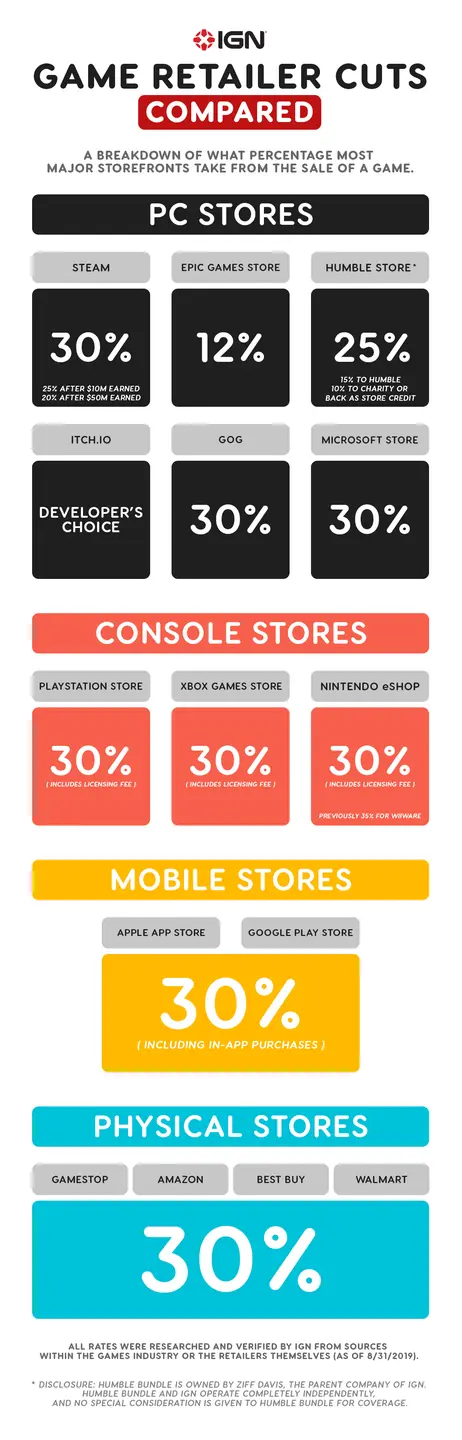
    Valve skims 10-30% of an insanely large volume of transactions and should be held to a much higher standard.

    10 - 30 % really isn’t that unreasonable compared to a lot of existing comptetitors… though I guess we’ll see how their ongoing lawsuit around that ends up.

    relevant infographic

    Either way, this also doesn’t make or not make them a monopoly, unless you or the ongoing lawsuit can prove that a 30% is functionally an outsized monopoly rent, wildly out of step with the rest of the industry.

    If this is instead roughly in line with the rest of the industry, you’d again need to address this with some other legislation that spans the whole industry, not specifically targeting Steam as a monopoly.


  • The word for a market dominated by only a few very large players is oligopoly, not… polyopoly.

    Not saying you’re saying that, just saying.

    As to the etymology…

    Its derives from Greek.

    A monopoly has one (mono) influential seller for many (poly) consumers.

    An oligopoly has a few, wealthy (oligo, as in oligarch, oligarchy) sellers for many (poly) consumers.

    Importantly, in Greek, poly is closely related to polis, meaning basically ‘all of the people/citizens’.

    This is also where English gets ‘Politics’ from.

    Also, I wrote a whole other comment, but the mere existence of any competitors, no matter how small… doesn’t mean you aren’t a monopoly.

    Its just means you aren’t a perfect monopoly, which basically never exists in real life, outside of public utilities.

    If the rubric for ‘is it a monopoly?’ was ‘do any competitors exist?’, then basically no company that’s ever been broken up or regulated for being a monopoly was actually a monopoly.


  • A lot of people seem to think that a monopoly has a much, much more direct and literal definition than it actually does.

    The definition the FTC uses is:

    Courts do not require a literal monopoly before applying rules for single firm conduct; that term is used as shorthand for a firm with significant and durable market power — that is, the long term ability to raise price or exclude competitors.

    That is how that term is used here: a “monopolist” is a firm with significant and durable market power.

    Courts look at the firm’s market share, but typically do not find monopoly power if the firm (or a group of firms acting in concert) has less than 50 percent of the sales of a particular product or service within a certain geographic area.

    Some courts have required much higher percentages.

    https://www.ftc.gov/advice-guidance/competition-guidance/guide-antitrust-laws/single-firm-conduct/monopolization-defined

    I have a bachelor’s in Econ.

    The people that run and advise the FTC have PhDs.

    (Well, at least untill Elon and Trump put the fucking Shark Tank guy in charge, or something like that.)

    Generally speaking, a monopolist is a single entity that has captured a huge chunk of an otherwise varying and well differentiated market, if your market is closer to the theoretical (ie, not real) idea of perfect competition, or if you’re talking about a consolidated market with only a few major players, the monopolist has at least 50% of the market, though, depending on other factors, that line may be drawn at up to 75% ish.

    Different specific situations, regions, laws, etc. establish differing specific criteria… but the idea is not that a monopolist is defined by being literally 100% of the market.

    That situation would specifically be referred to as a ‘perfect monopoly’, and like ‘perfect competition’, is basically theoretical only, or a situation where you’re looking at something like a local public utility or some kind of government/state entity.

    In actual mainstream academic and legal usage though, a monopoly is a single entity in the market has a very outsized market share when compared to any other market participant, such that its actions alone can very significantly affect all other market participants.

    Now… when it comes to Steam… a whole lot of the arguement is ‘what is and is not the market, what constitutes its boundaries?’

    If you define it as just ‘PC video games’, then sure Steam likely is an effective monopoly.

    But if you define it as ‘all digital games’, then no, not even close, the Google Play Store and Apple Store are responsible for far more digital game downloads than Steam, way waaay more games are mobile games than PC games, if you go by yearly or monthly downloads, or market share.

    It gets even more complicated with cross platform games.

    Ultimately, it would be up to a lawsuit, lawyers, judges, industry experts, to argue all of the specifics of exactly whether or not its legally valid to formally classify Steam as a monopoly that would need to be broken up or penalized or regulated in some way, and a huge part of that legal battle would be based around differing definitions of what exactly Steam is a monopoly if, and whether those precise definitions are valid.

    ‘Other options exist for consumers’ or ‘they don’t have a perfect monopoly’ is not a valid arguement against Steam being a monopoly if Steam facilitates 85% of PC game sales, and the other 15% is split up between 10 or so other digital store fronts.

    If that is your rubric for ‘what is the market’, then yeah, Steam is a monopoly.

    But, if your rubric is ‘all digital games’, then no, Steam is just a large player in a market with other larger players, other slightly smaller players, and many other very small players.

    Beyond that, a huge part of legally being determined to be a monopoly is unethical/illegal behavior of the ‘monopolist’ being used to obtain or maintain their monopoly.

    In Steam’s case… I think that would be pretty hard to substantiate, its more so just that Steam had the idea first, expanded upon it quite a lot, and no one really bothered to try to compete with them on the same level untill basically the Epic store, fairly recently.


  • I worked at a large import export firm based out of Seattle a decade ago. All of their internal and external accounting ultimately relied on COBOL as well.

    A single guy maintained it all… he also wrote it all, originally. Got back from the Vietnam war, learned COBOL with his GI Bill, went to work for this company, stayed for his whole life.

    He kept telling the board that they needed to find a replacement, or three, for him, when he retired.

    They did not, at least not before he retired, and I left several months later due to every system I relied on to do my work breaking down after he left.


  • sp3ctr4l@lemmy.ziptoProgrammer Humor@lemmy.mlLearn to code
    link
    fedilink
    English
    arrow-up
    5
    arrow-down
    4
    ·
    edit-2
    11 months ago

    Yeah, I learned to code almost 20 years ago in order to mod video games, and learned that many bugs and massive problems in mods and games are caused by coders being either extremely lazy or making extremely dumb decisions.

    In general, a ginormous problem with basically all software is technical debt and spaghetti code making things roughly increase in inefficiency and unneccesarry, poorly documented complexity at the same rate as hardware advances in compute power.

    Basically nobody ever refactors anything, its just bandaids upon bandaids upon bandaids, because a refactor only makes sense in a 1 or 2 year + timeframe, but basically all corporations only exist in a next quarter timeframe.

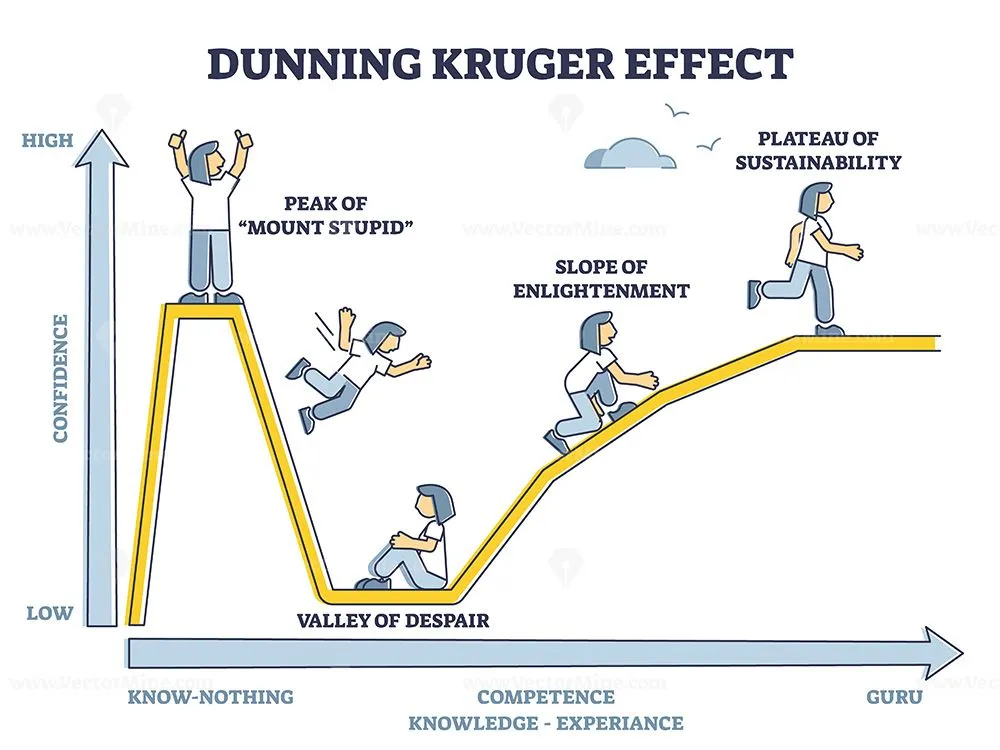
    This Jack Forge guy is just, just starting to downslope from the peak of the dunning kruger graph of competence vs confidence.