

1·
4 months agoCan I be a minor character gesturing rudely at the anthromorphic prophylactic and declaring “Arlong did nothing wrong”?
Can I be a minor character gesturing rudely at the anthromorphic prophylactic and declaring “Arlong did nothing wrong”?
The Internet boom didn’t have the weird you’re-holding-it-wrong vibe too. Legit “It doesn’t help with my use case concerns” seem to all too often get answered with choruses of “but have you tried this week’s model? Have you spent enough time trying to play with it and tweak it to get something more like you want?” Don’t admit limits to the tech, just keep hitting the gacha.
I’ve had people say I’m not approaching AI in “good faith”. I say that you didn’t need “good faith” to see that Lotus 1-2-3 was more flexible and faster than tallying up inventory on paper, or that AltaVista was faster than browsing a card catalog.
I have to think that most people won’t want to do local training.
It’s like Gentoo Linux. Yeah, you can compile everything with the exact optimal set of options for your kit, but at huge inefficiency when most use cases might be mostly served by two or three pre built options.
If you’re just running pre-made models, plenty of them will run on a 6900XT or whatever.
I believe the huge mistake in HTML wasn’t having some sort of element-level addressability.
People went insane over “the page flashes for 15ms because we have to reload the header and footer and it doesn’t look NAAATIVE!” and the response was to SPA/AJAX everything, inviting a huge Turing-complete nightmare of possibilities when 95% of what peopleneed would be delivered with < form action=“blah” replace_with_response=“#foo” >
That and a dearth of native widgets-- a < combobox > and a < menu > that worked like the system menus might have kept JavaScript as the sick oddity it should be.
Grok went into a new conspiracy k-hole?

Try RiscOS for a glimpse of a world most of us missed.

I wonder what impact a truly high end CPU being open would have on the fab industry.
Right now, there’s a lot of manufacturing secret sauce; if you took an Intel design, it would require significant rework to perform well on Samsung or TSMC process.
Fab owners would have a vested competitive interest to customize the design to perform better on their tooling.
Conversely, buyers might develop a renewed interest in second-sourcing-- if you can take your chip to any fab, you have more control over your supply chain.

Not to mention I bent all the pins on my Cyrix MII ttying to get it in that stupid socket.
I’ve seen a lot of cheap little “appliance” machines-- fanless devices meant to be network routers, NAS devices, signage controllers advertised as running on like 4th and 5th generation laptop CPUs.
I understand pre-OS X Macintoshes used colons.
I never seem to get appropriately coded romance scams.
I guess the RFI from my computer is jamming the gaydar.
I read about this. They make the printer WITH a perfectly good USB port and then stick a “no USB” label over it and attempt to force you to use their wireless setup.
I guess the assumption is more that for me, a fresh install is often about decluttering as much as anything-- the five Wayland compositors, three music players, and six pseudo-IDEs I tried and didn’t like don’t need to follow me to the next build.
In a conventional install, that just means “don’t check the checkbox in the installer next time”. In a Nix-style system, this is a conscious process of actively deciding to remove things from the stored configuration, no?
I suppose the closest I’ve gotten was recently migrating my setup from a desktop to a new laptop. Mostly copying over some config from my home directory, but even then, I wanted enough different stuff-- removing tools I don’t use on the laptop, adding things like battery monitoring and Wi-Fi control-- that it involved some reconfiguration.
I suspect the tooling isn’t quite there yet for desktop use cases.
If I were to try to replicate my current desktop in an immutable model, it would involve a lot of manual labour in scripting or checkpointing every time I installed or configured something, to save a few hours of labour in 2 years time when I get a new drive or do a full install.
The case is easier for defined workload servers and dev environments that are regularly spun up fresh.
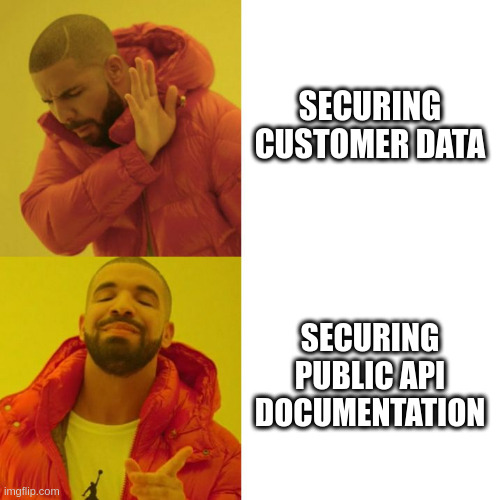
No, this is a general practice-- I see it a lot with third-party vendors who want you to integrate with their services. They’ll expire the documentation portal password after 90 days, but the actual user facing service still accepts the same “password123” that’s been set since 2004.
I suspect the pattern is to protect the vendors from developer scrutiny: by the time you’ve jumped through enough hoops to read the docs and realize it’s trash, the execs have signed the contracts and the sunk costs are too high to bail out.
Also add another 6 months to actually get the credentials for the test environment.

Chromebooks maybe?
I always figured the browser part mostly falls out of doing the Electron-for-cross-platform thing.
Silly idea: computer vision for classtoom rollcall. Take a photo and it generates a list of absences.
I think there would be more sympathy if Cloudflare pointed to a specific limit breached and proposed ways to get into compliance at their current price plan.
“Service XYZ is now consuming 500% of expected quota. Shut it down or we need to get you on a bigger plan.” is actionable and meaningful, and feels a little less like a shakedown.
I’m sick of “unlimited” services that really mean “there’s a limit but we aren’t going to say what it is.” By that standard, freaking mobile telecoms are far more transparent and good-faith players!
Perhaps this also represents a failing in Cloudflare’s product matrix. Everyone loves the “contact sales for a bespoke enterprise plan” model, but you should be creating a clear road to it, and faux-unlimited isn’t it. Not everyone needs $random_enterprise_feature, so there’s value in a disclosed quota and pay-as-you-scale approach: the customer should be eager to reach out to your sales team because the enterprise plan should offer better value than off-the-rack options at high scale.
Why can’t we subsidize American carmakers more?


What’s interesting is that we sort of have a counterpoint already with The Orville’s Moclans, who have interpreted their warrior culture fixation as mandating force-transition to suppress females. This results in an interesting cameo by Dolly Parton playing her own hologram. The Klingons are at least more progressive there.