- 15 Posts
- 69 Comments

 1·5 months ago
Made a short podcast episode to highlight Jellyswarrm. Hope you enjoy https://podcast.james.network/@linuxprepper/episodes/happy-birthday-linux
Presuming jellyfin would actually be on the public internet?
Good question. Asked the developer, so feel free to chime in: https://github.com/Angablade/JellyfinFederationPlugin/issues/1#issuecomment-3217864250
Haha, you certainly don’t have to host it at a public url over http.
What sort of conflicts?
Jellyfin plays the media. It doesn’t make/produce/edit or upload the media. Think of it as DIY Netflix service
Keep in mind this isn’t federation. It is a way to access multiple independent servers via reverse proxy.
Here are some thoughts from Jellyfin-offtopic:
- I wouldn’t trust it especially with the new DB coming out. No way Jellyfin’s own DB supports multiple servers. It would be up to the tool to keep track of everything. And I’m assuming only one person is supposed to run that thing on multiple servers.
- How would this work when multiple people want to connect to others at the same time?
Yep, it has already been posted here. Cheers!
Yep, this was mentioned in that thread and it is so impressive it deserves a dedicated topic to promote itself. Seems it has only existed for a few hours!
Post inception. That post was linked from this thread, hahaha.
 Oh wow, repo is https://github.com/LLukas22/Jellyswarrm Jellyswarrm is a reverse proxy that lets you combine multiple Jellyfin servers into one place. If you’ve got libraries spread across different locations or just want everything together, Jellyswarrm makes it easy to access all your media from a single interface.
Working
- Unified Library Access – Browse media from multiple Jellyfin servers in one place.
- Direct Playback – Play content straight from the original server without extra overhead.
- User Mapping – Link accounts across servers for a consistent user experience.
- API Compatibility – Appears as a normal Jellyfin server, so existing apps and tools still work.
⚠️ In Progress
- Websocket Support – Needed for real-time features like SyncPlay (not fully reliable yet).
- Audio Streaming – May not function correctly (still untested in many cases).
- Automatic Bitrate Adjustment – Stream quality based on network conditions isn’t supported yet.
🚫 Not Planned
- Admin Functions – Server administration (user management, settings, etc.) won’t be supported through Jellyswarrm.----
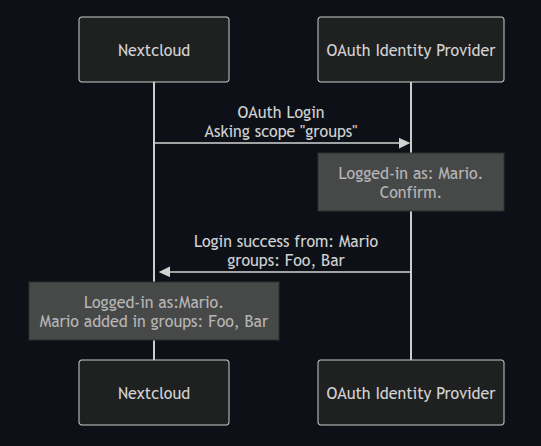
Thanks, this helped me better understand what is going on. Tried to formulate a response: https://github.com/nextcloud/server/issues/26233#issuecomment-3217564155
Thank you for checking!
Sounds like a question to ask the project directly, via their contact on the site: [email protected]
One sentence answer: “Object storage manages data as discrete units called objects with unique identifiers and metadata, while file storage organizes data in a hierarchical structure of files and folders.”
fwiw, I see object storage used as a way to manage data regardless of the file system. It is designed to scale, as opposed to the file system, in large cloud environments.
Here is a recap from Google Cloud:
Object storage, also known as object-based storage, is a computer data storage architecture designed to handle large amounts of unstructured data. Unlike other architectures, it designates data as distinct units, bundled with metadata and a unique identifier that can be used to locate and access each data unit.
These units—or objects—can be stored on-premises, but are typically stored in the cloud, making them easily accessible from anywhere. Due to object storage’s scale-out capabilities, there are few limits to its scalability, and it’s less costly to store large data volumes than other options, such as block storage.
Much of today’s data is unstructured: email, media and audio files, web pages, sensor data, and other types of digital content that do not fit easily into traditional databases. As a result, finding efficient and affordable ways to store and manage it has become problematic. Increasingly, object storage has become the preferred method for storing static content, data arches, and backups.
Minio has worked well for many years. Haven’t had any problems with it until now, but ready to migrate away.

If you want it as an article, here are the detailed show notes: https://discuss.james.network/public/d/48-episode-8-shownotes-self-hosted-tooling-dead-tech-papercrafting
Not possible for me to know if it works if people don’t listen. No pressure though and thanks for the feedback. My intention is to make it worth the listen, haha.
Haha, this book keep popping back up.